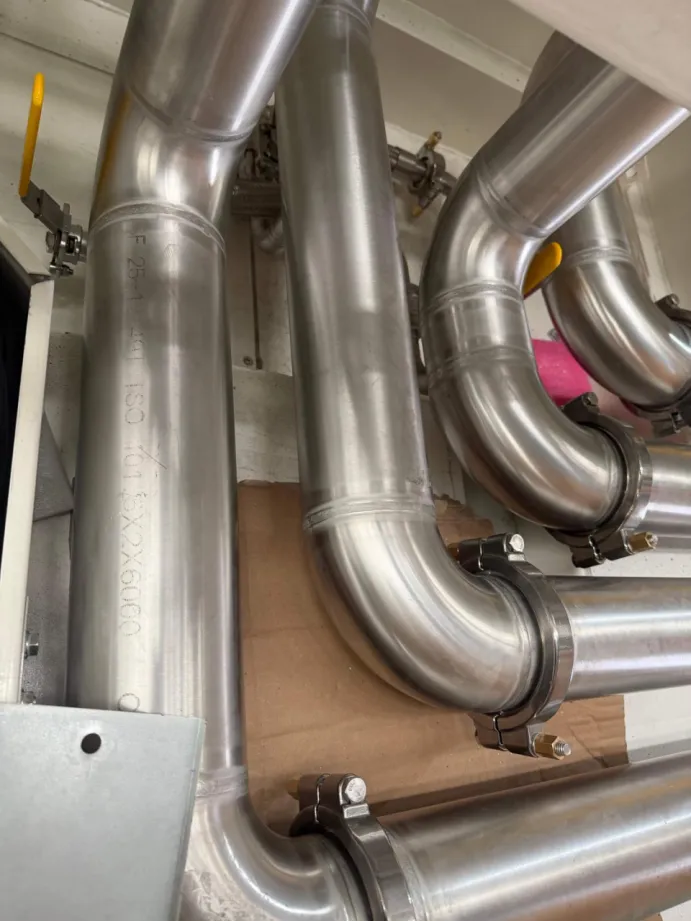


With the explosive growth of artificial intelligence and big data technologies, the computing power density of AI servers continues to climb, with single-chip power consumption exceeding 1000W. Against this backdrop, liquid cooling technology has rapidly evolved from an "optional solution" to a "must-have." The large-scale implementation of solutions such as cold-plate liquid cooling and immersion liquid cooling has brought about a massive demand for liquid-cooled pipeline welding. As a high-tech enterprise with decades of experience in automated welding, Shanghai Kepuni Automation Technology Co., Ltd., with its core products such as all-position pipe welding machines, is providing reliable technical support for high-standard welding of AI liquid-cooled pipelines.
I. Core Technical Requirements for AI Liquid-Cooled Pipeline Welding
The liquid cooling system is hailed as the "vascular network" of AI servers, bearing the crucial responsibility of carrying high heat flux density heat out of the server rack. This system typically consists of chip-level microchannels, internal server connecting hoses, internal rack branch pipes, and infrastructure-level main pipes. At each level, the welding quality directly determines the sealing, pressure resistance, and long-term reliability of the liquid cooling system.
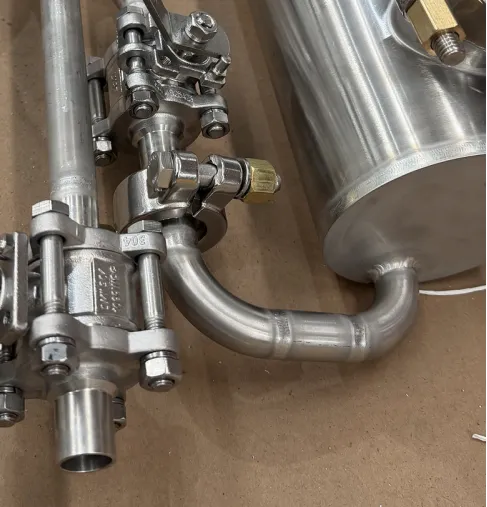
From the current mainstream liquid cooling piping design, welding faces the following three major technical challenges:
1. Thin-walled tubing: Liquid cooling piping extensively uses 304/316L stainless steel, with wall thicknesses generally below 3mm, and even as thin as 0.15-0.6mm.
2. High cleanliness and corrosion resistance requirements: Coolant circulates continuously in the piping. If the inner side of the weld is oxidized and blackened or has micropores, it may not only cause leaks but also shorten the system's lifespan due to electrochemical corrosion. Therefore, welding must achieve single-sided welding with double-sided forming, and the inner wall must maintain a qualified silver-white or light yellow oxidation state.
3. All-position welding and space constraints: Liquid cooling piping layouts are compact, and the space inside the cabinet is limited. Welders often find it difficult to weld in flat positions. This requires welding equipment with all-position welding capabilities, and the welding torch must be sufficiently lightweight and flexible.
II. Technological Advantages of Kepuni Automated Pipe Welding Machines Addressing the aforementioned industry pain points, Shanghai Kepuni's independently developed series of all-position automated pipe welding machines are highly compatible with the welding needs of liquid-cooled pipelines, from the control system and welding torch design to the process database.
1. Precision Control System: Ensuring Welding Stability from the Source
Kepuni pipe welding machines are equipped with a precision control system based on Siemens PLCs, capable of precisely controlling parameters such as welding current, voltage, pulse frequency, and travel speed. For liquid-cooled pipes with a wall thickness of only 0.5mm, the equipment can achieve stable fusion with low current and appropriate welding speed. Simultaneously, the equipment has multiple protection functions, including overvoltage, overload, arc ignition failure, and tungsten needle short circuit protection, ensuring the safety and reliability of continuous production.
2. Dual Venting Protection and Built-in Water Cooling: Achieving Clean Welding Liquid-cooled pipelines require extremely high resistance to weld oxidation. The Kepuni pipe welding machine employs a dual venting protection design, where argon gas is sprayed externally from the welding torch to protect the molten pool, and argon gas is simultaneously purged onto the inner wall of the pipe fitting for protection, effectively preventing oxidation and blackening of the weld's inner surface. This design perfectly aligns with the core process requirement of "argon purging of the inner wall" in liquid-cooled pipe welding.
Furthermore, the welding torch utilizes a built-in circulating water cooling system, significantly improving its duty cycle. During prolonged continuous welding, the torch does not overheat, protecting the equipment and ensuring the stability of the welding arc.
3. Expert Database and Intelligent Operation: Lowering the Technical Barrier The booming liquid cooling industry has led to a shortage of skilled welders. The Kepuni pipe welding machine incorporates a welding expert database. Operators only need to input basic information such as pipe diameter and wall thickness on a 10-inch color touchscreen, and the machine automatically generates optimized welding parameters. One-button operation and simulation functions allow ordinary workers to quickly learn and operate the machine, effectively alleviating the pressure of a shortage of professional welders.
4. Data Traceability and Quality Control For large-scale data center construction, welding quality traceability is crucial. The Kepuni welding machine supports automatic printing of welding parameters, recording actual welding current, voltage, and other data for later quality review and process improvement. This function helps liquid cooling system integrators establish a complete quality controlsystem.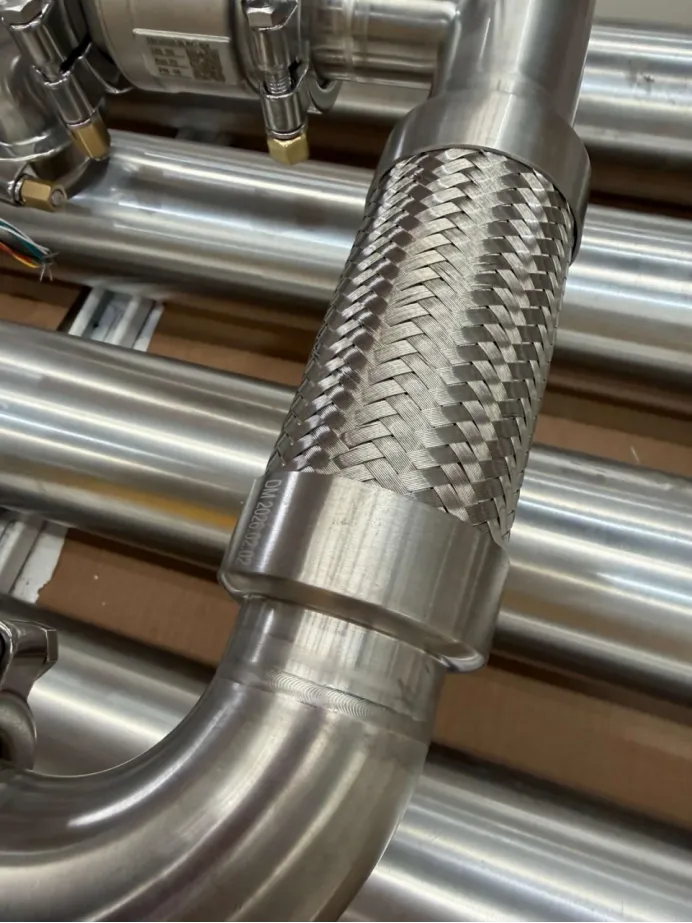
III. Comprehensive Application Value: From "Welding Capabilities" to "Superior Welding"
In the emerging field of AI-powered liquid-cooled pipe welding, the application value of the KEPuni automated pipe welding machine is reflected in three aspects:
Quality: Automated welding eliminates human interference, resulting in uniform and aesthetically pleasing weld formations, stable pass rates, and meeting the stringent "zero leakage" requirements of liquid-cooled systems.
Efficiency: Compared to manual argon arc welding, automated welding is faster and eliminates the need for extensive post-weld grinding, significantly improving overall efficiency.
Cost: The equipment has a low operating threshold, reducing reliance on highly skilled welders. Ordinary workers can quickly learn to operate it after simple training, and the improved efficiency also reduces production costs.。